

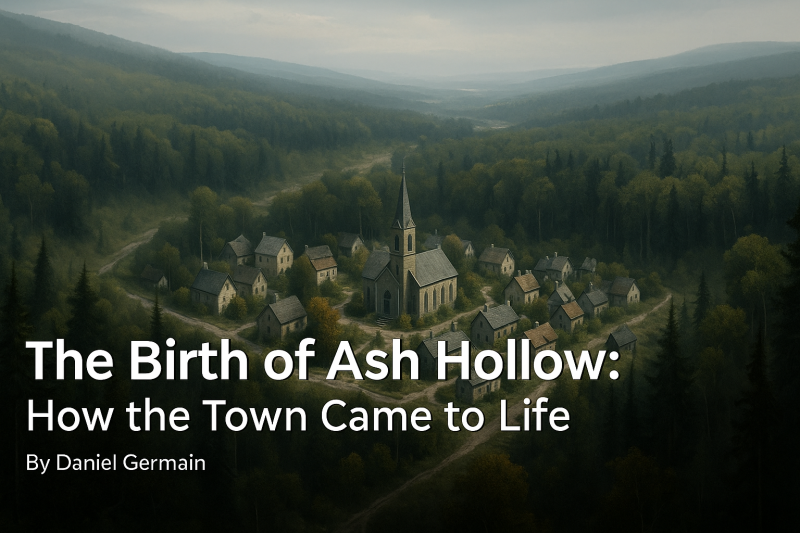
Some fictional places fade the moment a story ends. Others stay with you — quietly, stubbornly — long after the final page is turned. Ash Hollow belongs to the second kind.
Before it became the setting of Echoes of the Forgotten, before its streets filled with secrets and its forest whispered with unanswered questions, Ash Hollow existed as nothing more than a feeling. A mood. A shadow at the edge of the imagination. It was never meant to be just a backdrop. From the very beginning, it was meant to breathe, watch, hide, and remember.
As a writer, I’ve always been drawn to places where silence speaks louder than words — towns where people carry more history than they admit, where the past is not truly buried, only waiting. Ash Hollow was born from that attraction. A small town that looks quiet on the surface, ordinary even… yet underneath, something lingers. Something unresolved.
What fascinates me most about fictional towns is how they mirror us. A town can suffer. A town can forget. A town can protect its own secrets even when its people cannot. In Echoes of the Forgotten, Ash Hollow became the perfect vessel for themes that have always haunted me: memory, fear, resilience, and the invisible weight of what we inherit from the past.
This article is not about plot twists or spoilers. It’s about the soul of the town itself — how Ash Hollow came to life, how it grew into a character of its own, and why it will continue to evolve in Return of the Echoes.
Every story has a beginning. This is the beginning of the place where it all unfolds.
The Land Before the Town
Before Ash Hollow had a name, before it had streets, homes, and a church steeple rising through the mist, there was only the land.
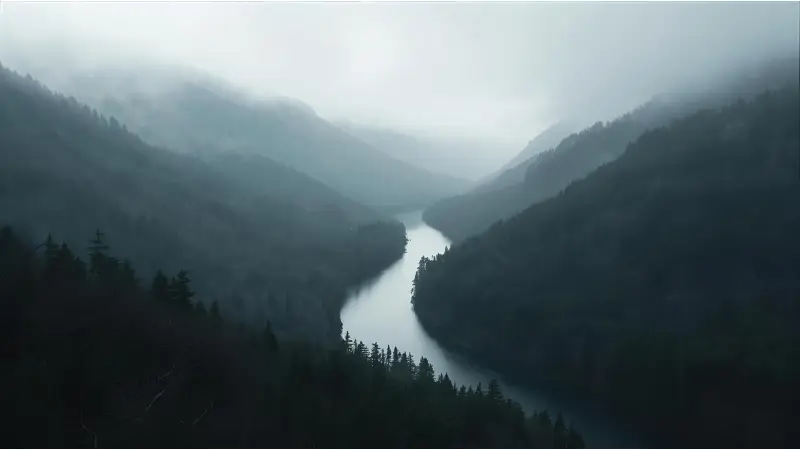
A wide, quiet valley stretched between rolling hills, wrapped in dense forest and shaped by a slow, winding river. The trees grew close together, their branches tangled like veins beneath the sky. Fog often settled there at dawn and dusk, clinging to the ground as if the earth itself was holding its breath. Even now, in my imagination, that fog feels like the first breath of Ash Hollow.
Long before settlers arrived, the land already carried a presence. The river whispered endlessly against the stones. The forest shifted with unseen movement. There was a sense of stillness that was not empty, but watchful. It is in places like this that stories often begin — not with people, but with atmosphere.
When I first imagined Ash Hollow, it did not appear as a town. It appeared as a feeling shaped by that landscape. Isolation. Distance. Silence that feels thick rather than peaceful. I wanted the land itself to feel like it was storing memories long before anyone arrived to create them.
The valley was never meant to be hostile. In fact, it is strikingly beautiful. Soft hills, endless green in summer, snow that blankets everything in quiet during winter. But beneath that beauty lies a subtle unease — the sense that something old is watching from beneath the surface.
This contrast between beauty and unease became essential to Ash Hollow’s identity. The town would eventually grow from this land, but it would never fully tame it. The forest would remain close. The fog would still return. The river would continue to whisper — as if reminding the town that it was only ever a guest.
And so, before there was Ash Hollow the town, there was Ash Hollow the place.
The First Whisper of a Town
Before Ash Hollow became a setting, it was a sensation.
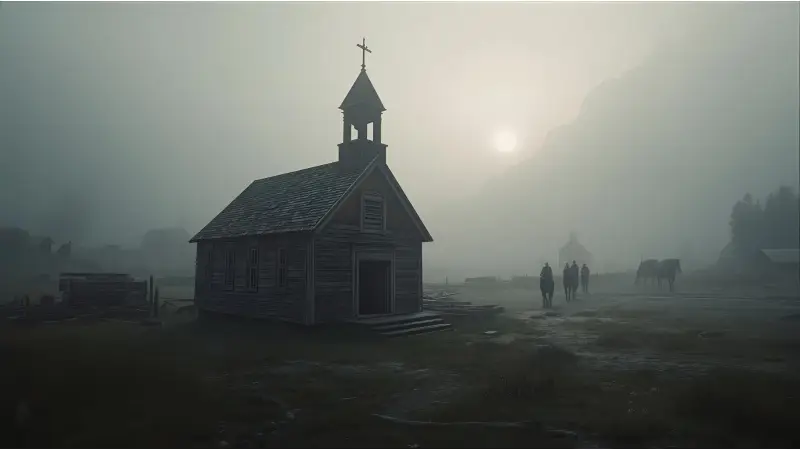
The town did not arrive fully formed in my imagination. It emerged in fragments — a lonely road, a church steeple rising from the fog, a dense forest that seemed to listen. At first, there was no name, no map, no history. Only a feeling: isolation, memory, and something quietly unresolved.
Ash Hollow was born from that atmosphere.
I’ve always been drawn to places that feel suspended in time. Towns where the past never fully releases its grip, where every street corner carries echoes of former lives. In many ways, Ash Hollow represents that fascination. It is not just a fictional town — it is a vessel for silence, for secrets, for what remains unspoken between generations.
The earliest version of Ash Hollow existed only as scenery. It was meant to frame a story, nothing more. But as I began to write Echoes of the Forgotten, something unexpected happened: the town started to demand its own voice. It wanted history. It wanted memory. It wanted wounds.
Slowly, details surfaced. A small rural community tucked away in the hills. A church that stood longer than most of its buildings. Families who had lived there for generations, bound together by shared tragedies and shared denials. The more I explored the characters, the more the town itself revealed its identity — as if it had been waiting patiently to be seen.
What fascinated me most was how naturally Ash Hollow mirrored human psychology. The town forgets. The town hides. The town protects itself — sometimes at the cost of truth. In that sense, it became the perfect symbolic landscape for the themes I wanted to explore: memory, guilt, resilience, and the fragile line between what we face and what we bury.
By the time the first chapters of Echoes of the Forgotten were complete, Ash Hollow was no longer a backdrop. It had become a character in its own right — breathing quietly beneath every scene, watching every decision, and holding onto every loss.
And like all meaningful places in fiction, it refused to stay silent.
Secrets Beneath the Soil
No one agrees on when the first disappearance happened.
Some say it was a child who wandered too close to the forest at dusk and never returned. Others speak of a hunter who followed tracks deep into the trees and was never seen again. There are no official records that remain, no names carved into stone that clearly mark a beginning. Only fragments. Only whispers.
What matters is not who vanished first — but what followed.
After that, Ash Hollow learned a new behavior: silence. Questions were asked softly at first, then less and less. People stopped searching the woods at night. Doors were locked earlier. Oil lamps burned longer. And when morning came with no answers, the town learned to pretend nothing had happened.
Rumors became part of daily life. Some said the forest shifted at night. Others claimed the fog swallowed sound itself. A few whispered that the land had always demanded something in return. Most people smiled politely and changed the subject.
Fear, in Ash Hollow, was not dramatic. It was practical.
It showed in small habits — the way parents called their children home early, the way travelers were advised not to stay long, the way older residents lowered their voices when certain parts of town were mentioned. There were roads people avoided without quite remembering why. There were names no one spoke anymore.
What fascinated me as a writer was not the mystery itself, but the collective agreement to live beside it. No riots. No mass panic. Only a slow, quiet burial of truth beneath routine.
Ash Hollow did not erase its past. It layered over it.
Each disappearance, each unexplained event, sank into the soil like sediment. Over time, the ground itself seemed to grow heavier with memory. The forest became not just a place, but a warning. The fog not just weather, but a boundary between what could be spoken and what could not.
And the town continued to function — not because it was safe, but because it had mastered the art of looking away.
Some towns are built on foundations of stone.
Ash Hollow was built on what it chose not to see.
Stories of isolated towns marked by strange disappearances, abandoned streets, and lingering fears have long fascinated storytellers and travelers alike. Across North America, countless small communities have become legends in their own right — places where history, mystery, and rumor merge into a single unsettling identity. Accounts of these places, often described through collections of haunted small towns and rural ghost stories, reveal how entire regions can become defined by what went wrong, what vanished, and what remains hidden beneath the surface.
How Memory Shaped the Town
In Ash Hollow, memory did not live in museums or records. It lived in habits.
People remembered through what they avoided. Through the roads they no longer took at night. Through the names they hesitated to say. Through the stories that were told halfway, then gently abandoned before reaching their end. Memory, here, was not something preserved — it was something managed.
Over time, the town developed its own rhythm of forgetting. Certain events became distorted, softened by repetition. Details shifted. Dates blurred. Eventually, even the fear lost its sharp edges and turned into something quieter — a vague discomfort, a sense of caution passed from one generation to the next without explanation.
Children learned what not to ask long before they understood why. Teenagers tested boundaries they had never seen drawn. Adults carried anxieties they could not source. In this way, memory became inherited rather than learned.
What fascinated me most was how this unspoken memory shaped the identity of the town itself. Ash Hollow did not appear haunted in any obvious way. There were no crumbling ruins, no overt signs of tragedy. On the surface, it functioned like any small rural community. But beneath that surface lived layers of buried emotion — grief that had never been processed, fear that had never been named, guilt that had never found confession.
In many ways, the town became a reflection of the human mind under trauma: functional, composed, and quietly fractured.
This was the moment when I understood that Ash Hollow did not merely contain a story. It embodied one. The town carried memory the way a person carries unresolved pain — not always visible, not always acknowledged, but always present.
And once memory takes root in a place, it begins to shape everything that grows from it.
Even the future.
Psychologists explain that memory is not simply a personal process, but something that also shapes how communities behave, remember, and forget over time. Even when the original events fade from conscious awareness, their emotional imprint can continue to influence fear, silence, and identity across generations. This is why understanding how memory shapes identity and behavior becomes essential when exploring how a town like Ash Hollow could carry unspoken trauma for decades without ever naming its source.
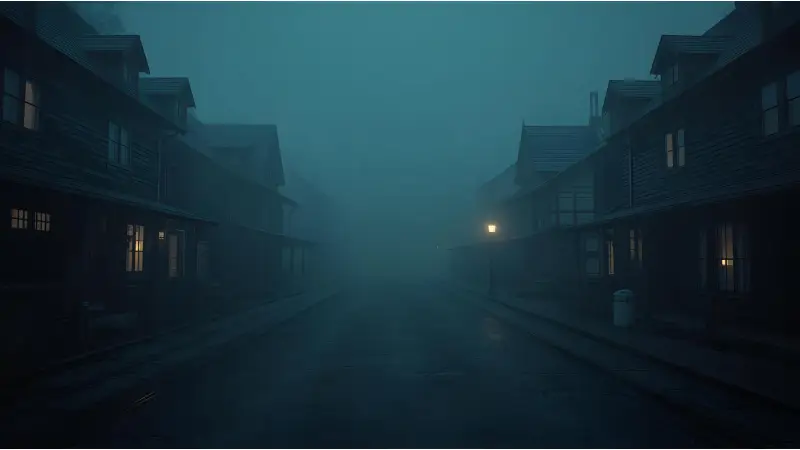
Why Ash Hollow Became a Character
At some point during the writing of Echoes of the Forgotten, I realized something had shifted.
Ash Hollow was no longer simply a setting where events unfolded. It was reacting. It was influencing decisions. It was shaping the emotional weight of every scene. The town had crossed an invisible line — it had become a character.
As writers, we often talk about protagonists and antagonists, about heroes and forces of opposition. But sometimes, the most powerful presence in a story is not a person at all. It is a place. A place that watches. A place that remembers. A place that exerts pressure without ever speaking.
What fascinated me was how naturally this happened. I never sat down and decided, “Ash Hollow will be a character.” It emerged from the way memory, silence, and fear had woven themselves into the landscape. The town began to behave like a living organism — protective in some moments, cruel in others, always resistant to being fully understood.
Its roads guided characters toward confrontation or escape. Its forest became both barrier and invitation. Its fog blurred not only distance, but certainty. The geography itself started to carry emotional consequence.
This transformation changed the way I wrote every scene. I stopped asking only what the characters wanted. I began to ask what the town wanted. What it would allow. What it would conceal.
In that moment, Ash Hollow stopped being a backdrop for trauma and became an active participant in it.
It was no longer just where the story happened.
It was part of why the story could happen at all.
The Future of Ash Hollow — Return of the Echoes
Some towns exist only within the boundaries of a single story. Ash Hollow was never meant to be one of them.
From the moment the final chapters of Echoes of the Forgotten were written, I knew the town was not finished speaking. Too many questions remained suspended in the air. Too many memories lingered beneath the surface. Too many silences still pressed against the edges of the narrative.
In Return of the Echoes, Ash Hollow does not simply return as a familiar setting — it evolves. The weight of what was buried begins to shift. What once remained hidden starts to fracture. The town’s memory, long suppressed, resists being contained any longer.
Without revealing what lies ahead, I can say this: the sequel deepens the psychological landscape of the town. The past does not stay behind. It moves. It reshapes relationships. It alters how truth is perceived. And as before, Ash Hollow stands at the center of it all — not as a neutral witness, but as a force shaped by everything it has chosen to remember and forget.
What excites me most about returning to this town is not simply continuing a plot — it is continuing a relationship. With the place. With its history. With the emotional architecture that has formed beneath its quiet exterior.
Ash Hollow still has secrets.
And it is not done echoing.
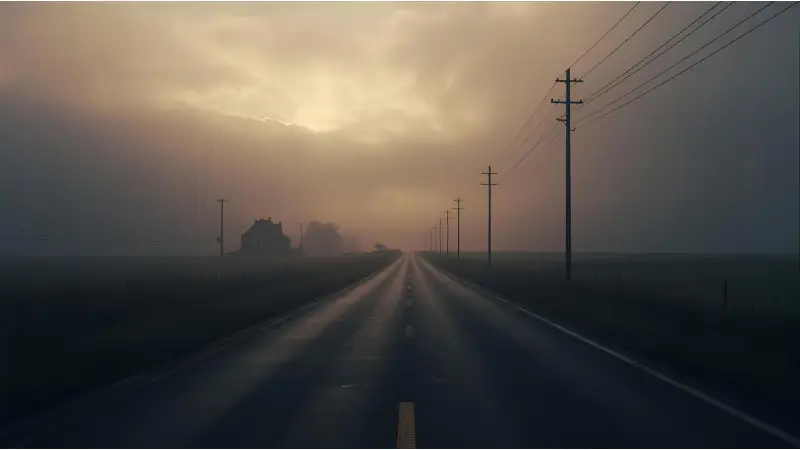
Conclusion — A Town That Still Breathes
Ash Hollow did not begin as a map on paper. It began as a feeling — a quiet tension, a sense of something unresolved lingering just beneath the surface. Over time, that feeling became a landscape. Then a town. Then a living presence within the story itself.
What makes fictional places endure is not their geography, but their memory. Ash Hollow exists because it remembers — even when its people try not to. It carries fear, silence, resilience, and loss the way a human mind carries unprocessed emotion.
Writing about its birth has reminded me that stories do not always begin with characters. Sometimes they begin with places that insist on being seen.
If you’ve walked its streets through Echoes of the Forgotten, you already know that Ash Hollow is more than a setting. And if you choose to return with me in Return of the Echoes, you’ll discover just how deeply the town’s past still reaches into its future.
Thank you for visiting the birthplace of Ash Hollow.
The town is still waiting.
By Daniel Germain
Add comment
Comments